


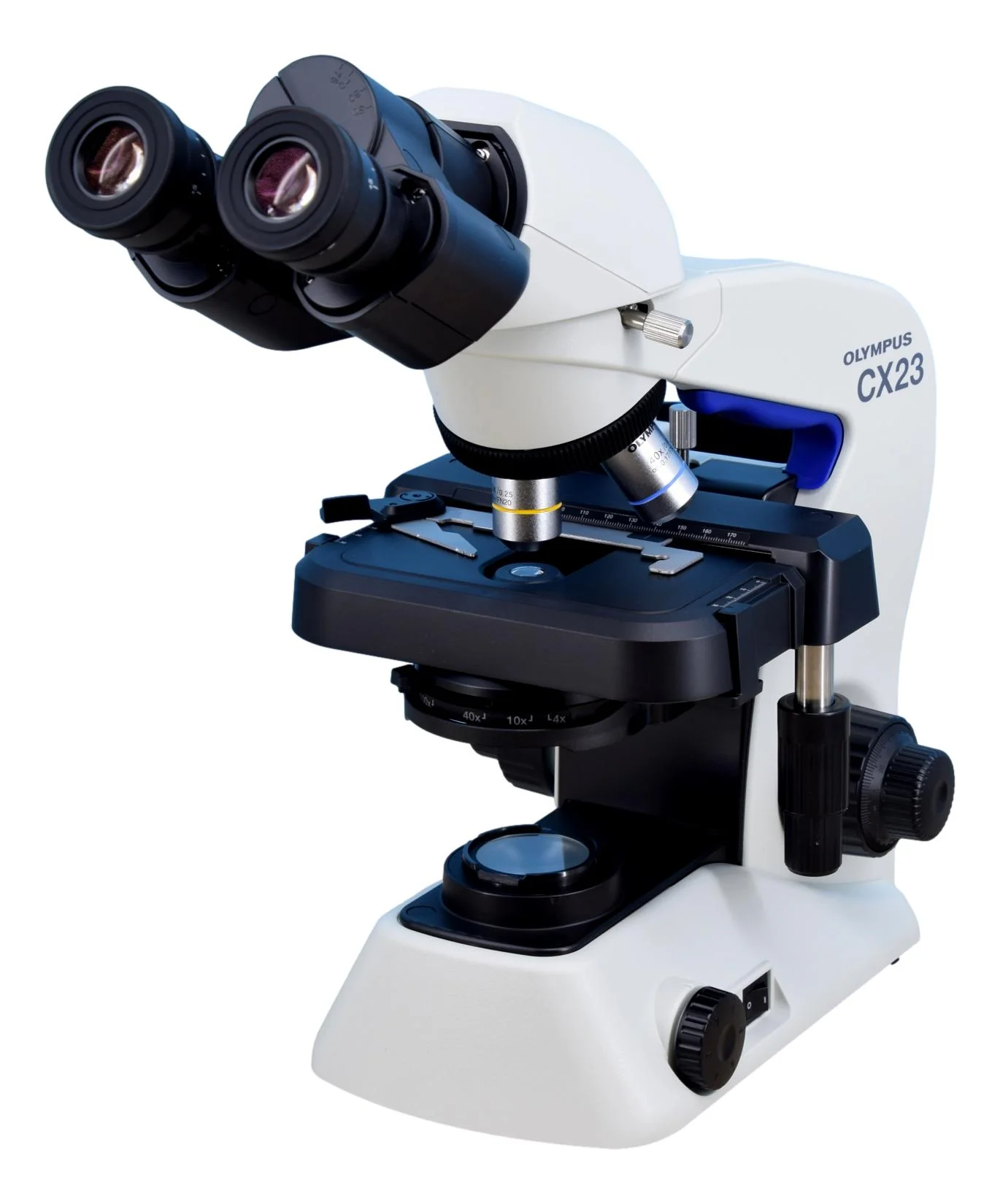
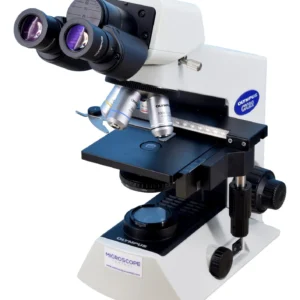
Olympus CX23 Binocular Microscope
The Olympus CX23 is a user-friendly binocular microscope engineered specifically for educational excellence and routine clinical applications. It features a compact, ergonomic design and high-quality Plan Achromat optics to provide clear, reliable imaging for students and laboratory professionals alike.
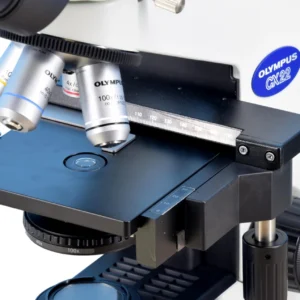
The Olympus CX23 sets a new standard for entry-level biological microscopy, succeeding the highly regarded CX22 model with enhanced portability and usability. This upright microscope is built to withstand the rigors of high-volume use in university labs and clinical settings. Its design prioritizes ergonomic comfort, featuring a 30-degree inclined binocular head and a low-positioned, rackless mechanical stage that eliminates protruding parts for a safer, smoother workflow.
Equipped with a quadruple revolving nosepiece and precision Plan Achromat objectives, the CX23 delivers consistent flatness of field and sharp color reproduction across the entire 20mm field of view. The integration of long-lasting LED illumination ensures a stable color temperature and exceptional energy efficiency, making it a sustainable choice for modern laboratories. With a focus on durability, the system utilizes all-metal gears and a brass fine-focus mechanism to ensure years of maintenance-free operation.
Key Features
- High-Performance Optics: Includes Plan Achromat 4x, 10x, 40x, and 100x (oil) objectives for superior image flatness.
- Ergonomic Binocular Head: 30-degree inclination and 360-degree rotation provide comfortable viewing for multiple users.
- Rackless Mechanical Stage: Smooth, precise specimen movement without the hazards of protruding racks common in older designs.
- Advanced Focus Control: Coaxial coarse/fine focus system equipped with an adjustable torque and an upper-limit stopper to prevent accidental slide breakage.
- Sustainable LED Illumination: Variable intensity LED provides uniform lighting with a lifespan significantly longer than traditional halogen bulbs.
- Portable Design: Lightweight frame with built-in ergonomic grips for safe transport and storage within educational environments.
Typical Applications/Uses
- Academic Education: Ideal for high school and university biology, anatomy, and life science programs.
- Clinical Diagnostics: Suitable for routine analysis in medical and veterinary clinics, including blood smears and urinalysis.
- Microbiology: Used for the observation of microorganisms, bacteria, and cell cultures.
- Research Training: Serves as a reliable entry-level tool for new researchers to learn staining and observation techniques.
Be the first to review “Olympus CX23 Binocular Microscope”
Related products
Lab Equipment


Lab Equipment


Lab Equipment
Lab Equipment
Reviews
There are no reviews yet.